
Duty of Care
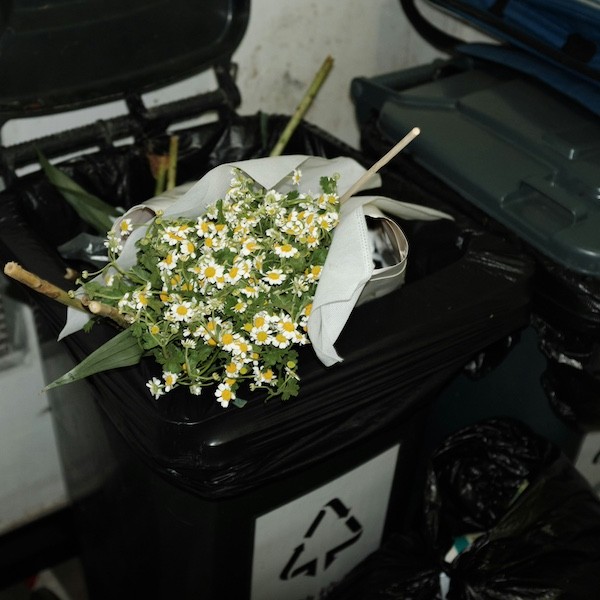
I ask the council to intervene, but they’re as useless as you’d expect. My letters go ignored, and when I eventually get a woman on the phone, I hear her bangles clash as she silently laughs, the little piece. I tell her it is a crime. I remind her that each household has a duty of care—but she makes me feel like I’m the one in the wrong. She gets me so angry I reach for my whistle, but I hang up before I blow down the phone. And finally knowing that we’re on our own only redoubles my resolve: I absolutely will not let this go.
~
I ask Mr. Chalmers to affix a sign to the tree, pointing out what everyone already knows. The recycling bags are meant to go out one day before collection, to be placed between the tree and the road. It’s laminated, yellow, impossible to ignore. But still the bags appear fully six days early, dumped on the wrong side of the tree. The waste isn’t even separated: I see rusted-over toasters, balled-up loo roll, nappies tight as blisters. Shoes and spectacles and clothes smeared with scrapings of food. Filth and dreck of all stripes, mixed with the plastics and metals and abandoned before my door in a stinking, fly-swarmed heap. This is not thoughtlessness, but criminality.
My first instinct is to drag the bags across the road and pile them against the door to the high-rise flats. Because now nobody can claim they didn’t know, even if they’re not from here. These people are openly defying the sign.
Mrs. Gish says the sacks attract rats, but for me this isn’t the point. Ugliness blasts the soul, brings us all low, and needlessly so when beauty is within easy reach. I’ve never considered myself personally beautiful, but I’ve always believed my instinct for beauty confers some small measure of beauty upon me. For doesn’t beauty when deeply beheld make the eye shine bright, like a mirror to the world? And isn’t cherishing the beauty of others most beautiful of all?
So I heave the sacks across the road and dump them right against the door. Let them make a slum of their side of the road.
~
For a time, I believe I can stir their civic pride. I pull the weeds from the foot of the tree and fence the space off with sticks. I loosen the soil on our side and plant towering snapdragon in a bed of blood-red nasturtium. In fact, I catch the bug and commandeer all the corners of our communal courtyard I can. Before long, the little lawn tucked away at the heart of our houses is an eruption of colour—yellow marigolds, pink pansies, the nocturnal purple of wild lavender. On these warm summer nights, you can even smell the sweet pea from the street. I thought they’d stop if they could just see what could be—but the bags come the same, thrown on top of the flowers under the tree. After this I move my reading to the window overlooking the street.
Collection day comes and goes; several days pass without the first bag being left. Then someone from telecom calls me to the door to discuss upgrading the cables: a young man with a sculpted beard, speaking in riddles. I hurry upstairs to the window to be confronted with the first bag beneath the tree. I rush downstairs not expecting to catch anyone—for whoever did it would have moved fast—and instinctively look across the street to the block of flats. The door is closed; its windows betray no sign of movement. I turn the corner into our little courtyard and find the long-haired man sat on the bench on our wild little lawn, his chin raised to the sun. This man I’ve seen often: pushing a pram or riding a cargo bike when you’d expect him to be at work, walking barefoot in the evenings with his young dark-skinned wife.
He’s not what I’d call presentable, but he’s handsome in that careless way which becomes a man. Blessed with the sort of well-set face that can’t be spoiled by life’s alterations. Somehow proud, and prowling, absolute in his movements. Basking in the sun now like a handsome animal, closing his eyes to take his pleasure, knowing he has power in reserve.
I stand there for a time, watching his chest rise and fall. If he really were responsible, would it be possible to sit this way in the sun? I open my mouth, but something in me catches my tongue. He’s somehow so sure, so self-possessed, his peace so complete as to be almost narcissistic. This man exists at the centre of his world, lodged so deep behind the membrane of his life that a woman like me could never break through.
~
Later that day I happen to pass the man’s door, and I glance at the names on the bell. Stokes/Greenwood. Two names: one his, one hers. The man and his wife are living side-by-side, as it were, with that modern equality that keeps them apart, that finally prevents one belonging to the other.
I weigh the names against the man on the bench. Stokes. Greenwood. I picture him first with one, then the other, savouring the way I make him different people. The man who is Stokes has an impulsiveness in him, a quickness to anger. I see him striding along some midnight street, dumping the bags without self-reproach, spurred by the forces inside him, irrevocably at odds with the world.
Standing on the toilet, I see into their kitchen. They move through the day as grey shapes, snapping into focus at dusk when the lights come on. The woman sits at the table and peels down her top to suckle the child from a coffee-coloured breast. The man moves with that regular, slow certainty, washing in and out like a tide. I think how wonderful it must be to live with a man like this. Never having to enter a room in the certainty it’ll be lifeless but for you, knowing everything will be where you left it, that you’ll never find a thing out of place.
I wonder if this woman knows how lucky she is. A woman from far away who has been welcomed into his home. Does she know how many of us would be thrilled with such a welcome, in the place we’re actually from? And I wonder at this man who has taken her on, who has chosen her over one of his own. It displays a degree of ingratitude, even greed. The greed of a man who is dissatisfied with what’s on offer and selfishly wants more. And it seems this man could well be a Stokes: handsome and pitiless and proud.
~
I don’t see him at the tree in the days following collection. I don’t see anyone at all. There’s a lull in the illegal dumping of bags. I sometimes take my coffee to the bench in our wild little garden and sit with my back to his patio door. I listen for him moving through the house, cradling the child in his arms. I see them often through the toilet window, and when curiosity bests me I stroll some few steps along the street at a safe distance, listening to his low voice spar with her more insistent tone. One day they turn abruptly and walk back towards me. I pass staring ahead so intently I’m unsure whether the woman greets me; and I barrel on with burning cheeks, not daring to hazard a reply.
They begin to leave the pram on the lawn. There is often nobody in the vicinity of the patio door for a long stretch of time. Time enough for something to happen, for the child to be injured, or even go missing. I take it upon myself to stand watch, to avert the threat of disaster. When it starts to make its small choking sobs, it is often a long time before anyone comes. And now I am certain: this man and his wife are a blight on this place many of us have lived all our lives.
~
At dawn one morning I discover the pram abandoned on the lawn. I’m startled to find the child asleep inside. The patio door is closed, and the house is dark. I’m horrified by the idea that the child has been forgotten overnight. Then I hear a man’s groans: loud animal groans whose provenance is unmistakeable. I look up to see the parents’ bedroom window wide open.
Just then, the man cries so loudly that the baby jerks awake. It opens its eyes and regards me blankly. I have no idea what to say. Presently, the groans find their response in a ravenous moan. We stare at each other, the child and I, listening to the seesawing grunts and moans, as loud as if they were rutting before us on the lawn.
And it is beyond belief. To leave their child to the custody of a passing stranger while they shamelessly broadcast their pleasure—it is simply not to be believed. For a moment I consider calling the police. The rhythm of the woman’s moans makes it impossible not to picture the man penetrating her; the image is thrust upon the mind. The man’s penis entering her body, the woman feeling that loss of control, that agony over what will happen, the pleasure of believing she will not endure.
I resolve then that this outrage will not stand. It cannot pass without consequence; a lesson must be learned. And before I know what has happened, the pram is tipped and the baby is sprawled in the dew, screaming at the top of its lungs.
I wonder if the man will come—breathless, interrupted in his pleasure, naked to the waist. But it’s the woman who steps out onto the patio. Her features twist into a snarl as she sees me cradling the baby beside the toppled pram. And I wonder what sort of person—what sort of mother—reacts this way to a woman who has found her child lying on the lawn.