
Piezoelectricity
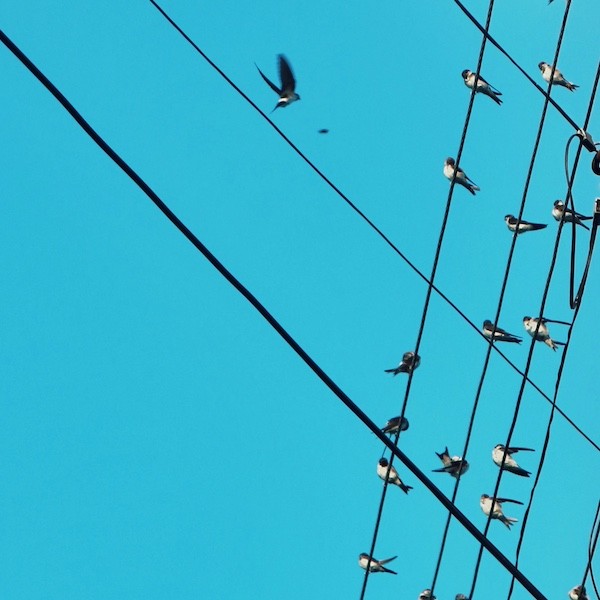
A poem came to me and swore it would do no harm. What would it do, then, I asked. It seemed surprised at the question. I am accustomed to defense, meaning the undoing of fences, it claimed.
I pressed the point that defense does not really mean the undoing of fences but the making of them, perhaps the negotiating of them. The poem then found a key defense. Alas, I am caught in my own desire—for the prefix de to be less of and more knot with a silent k. I replied: Why do you do things this way? The poem pulled me in and whispered (if a spoked wheel could whisper), I am charged with a mystery I can neither solve nor surrender. What would you do in my turn, it asked. I answered with unmelodic honesty, as much as I could find: I guess I would write it out and check my answers, the way students are asked to. Do as they are told, not as we tell ourselves? The poem riddled. I was always bad at riddles, I admitted. That’s why I’m here, the poem admitted. To improve me or my riddle-solving skills, I asked. To swallow the hook and have to learn how to live, it replied. Are you sure that’s no harm, I asked. I have already sworn as much to you. That’s my part. Yours is sensing what can be believed. Piezoelectricity: charge from touch. A quick stream of current through some fluid cloud of motion. “Do you know what I mean?” and “Do I know what you mean?”—we talked under each other simultaneously, then paused at what felt like a mild shock of meaning in its fullness or in its absence, it was difficult to say.