
Soon We Will All Be Satou
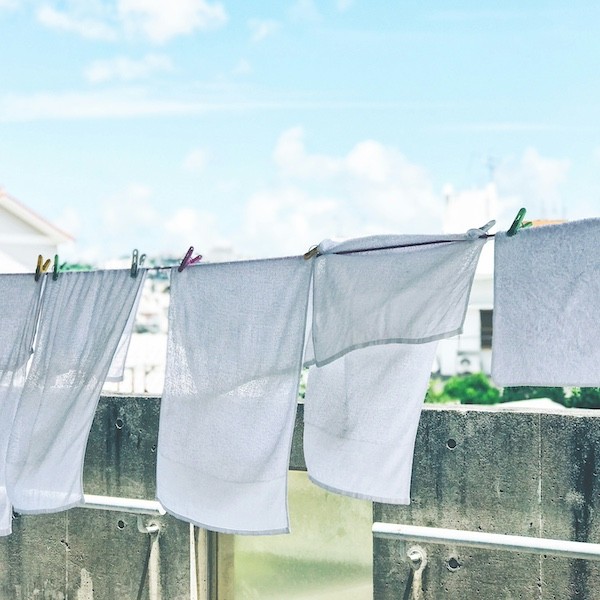
Ms. Sasaki Yoshiko is coming down the road in her wide floppy hat and long gloves and apron, not because she is avoiding the sun anymore at the age of sixty-three with so few people to see, but because those clothes and that covering have become a comfort. Ms. Sasaki Yoshiko is coming down the road, and when she sees the long shirts and linens hanging out to dry in the yard, she has a flash of remembering her mother, a fine old lady of Aomori who used to wear a plain striped kimono every day, long past when it was fashionable to do so, when all the other ladies had taken to dresses—or wide trousers if they were modern-thinking—and beneath her kimono and her under-kimono her mother always wore a soft linen slip and it was very fine and transparent in the sunlight just like my shirts, like carp streamers and onion skins and ghosts, and now she hears me reflecting back at her, and Ms. Sasaki Yoshiko who is coming down the road bobs her head in the direction of my window and we both smile and she continues on her way.
Silence.
The world is at peace again. Some days it feels empty, and other times so full with the quiet. I cherish it, I hold it, I mourn it. I had enjoyed the glimpse of Ms. Sasaki's mother, from an era so far back I would have known little aside from pictures. I enjoyed seeing Ms. Sasaki.
It has been thirteen years since we all fled the cities.
~
Thirteen and a half years ago, I was in Tokyo with Saeko. Weekdays were the same for me—wake up, go to the office (I worked in advertising—the devil’s armpit of the capitalist world), walk the hour or so home listening to music, no matter the weather, because the doctor had told me I needed more exercise as I entered my thirties and I was trying to raise my step count. Saeko worked most weekdays and—though my memories of those times falter—usually one weekend day, irregular shifts and hours, as she was a nurse. It was a hard job and she always seemed tired; some days she’d work back to back night shifts and morning shifts and only get a few hours’ sleep.
“Working ICU is less stressful, actually,” she told me with a cynical smile, back when we first started dating. “Because then you’ve got mandated breaks and rest periods. Can’t have sleep-deprived nurses and doctors handling the IVs and dangerous medications. It’s the charting and admin days that stretch twelve hours or more.”
“What do you do if you start nodding off?” I asked.
“I just use a josaidouki... what do you call them in English, 'defibrillators'?” She mimed a shuddering electric puppet dance.
Yet I often envied her all the same. It seemed she’d found a calling that had a real, tangible impact on the world and the people around her. I wondered what it was like going to bed thinking, I saved someone’s life today! Someone is breathing tonight because I performed CPR, because I noticed something funny with their charts.
It occurs to me, that was something you said back then: “I wonder what she thinks,” “I wonder what he thinks,” “I wonder what they think.”
Curling up on the couch with your wife in your cozy apartment in the big city, watching television late at night, the city growing quieter and quieter outside your window, these were things you could do. As the night grew colder, our room seemed to get warmer.
~
Every morning now I wake up and jog through the fields and along the river. I skip breakfast usually. I make coffee and tidy up the kitchen. Around 8:00 I log in for work. It’s insane to think we’re still working, sending emails, having conference calls. It’s insane to think mundane white collar jobs like advertising still exist in the world since the cataclysm—that we aren’t all joining hands (figuratively) and singing “Kumbaya,” or distributing food and clothing in rations rather than engaging in trade wars, but then I’m from Scandinavia. Video calls are actually wonderful, a glimpse into what the world used to be. We talk, mash our lips, articulate the mush in our brains into semi-coherent sentences. My English is getting rusty; my past was all Swedish, my day-to-day all Japanese. No neighbors that I’ve met since I moved to Aomori speak much English, and in any case no one does much speaking anymore.
The rumble of a motorized scooter on the road. A silent call from the garden: Yahho! Good morning!
I call back from the room I’ve converted into my office and troop downstairs to see the delivery man, Mr. Kubo Tomonori. He’s full of observations about the garden; he’s impressed I’ve been keeping it so well. In truth, there’s not much else for me to do when the workday is done aside from shopping, cooking, jogging, and gardening, to which he ruefully agrees. Have I thought of growing vegetables, or will I just keep it a pleasure garden? Well, I think, everyone in Japan seems to have gardens full of giant radishes and green onions, and I don’t know that I need that many fresh radishes and green onions. What do they grow in Sweden? Let’s see, when it’s not frozen over, we grow beets, kale, kohlrabi, lettuce…
Mr. Kubo always asks me questions about Sweden—it’s a far off place which fascinates him. Oh, no, I find his interest charming, and I enjoy thinking about my hometown, also in the countryside but on the other side of the world. Mr. Kubo wonders, as he often does, why I chose to move out here after the cataclysm rather than make my way back to Sweden. I answer him head-on, so to speak: You see, this was my wife’s family’s home…
Sadness in my heart. He bows deeply and expresses his condolences. No, it was already many years ago, I assure him, but of course I have already flashed to the shock and horror of that moment, to the deep mourning, to the long empty hours in my tidy kitchen and my well-kept garden. His face falls. He can only imagine; he and his family were quite lucky to have survived it all up north. He feels guilty; I feel guilty for making him feel guilty. We quickly turn to contemplating the house, the weather, the view of the valley.
He hesitates, then wonders, would I like to join him and his wife for tea some time? Of course Mr. Kubo the postman lives only a few kilometers away in the village. I warm to his invitation and he smiles shyly in a way that makes his eyes crinkle at the corners. Yes, I would like that very much.
~
The cataclysm was like a rising hum. One morning, I awoke and knew Saeko was having a terrible day. I had been having bad dreams that we were fighting, that she was ranting and scolding. When I emerged from our bedroom, I could tell—not by her face or body language or even her words—that she was stressed. Of course she had a strenuous life, but she was always one to roll her eyes and turn a wry smile. Today she chirped, “Good morning!” in her usual way, fussing about and preparing toast and coffee, but under her breath she was mumbling all her cares and worries.
Clock in early…that terrible rush hour on the subway, I hope I don’t get a sweaty mouth-breather pressed up against me today. Yamada is still slacking off so I’m sure I’ll be expected to pick up the extra work. The toaster is always so full of crumbs, we never have any time to clean it. That awful bitch new manager will probably give me more back-to-back shifts this week, I just know it…
It seemed to be a constant chatter.
“Is everything ok?” I asked her. “You just seem strained. Sit down—I’ll pour the coffee. Let’s open the jam from my parents.”
“I’m so pampered today,” Saeko murmured happily—though I felt sure she wasn’t really happy at all. “Honestly, I’m fine. I slept well last night—haven’t been so well-rested in days.”
I’ll be too tired tonight when I get home to do anything except eat and sleep. Why is my life like this? I work and I work and I never actually get to stop working, I just recharge for more work.
I stared down into my coffee. Something strange was happening. It had occurred to me that Saeko’s lips were not moving. Now that she sat across from me at the table, buttering her bread, this fact was unavoidable. I thought, perhaps, that it was me who was having the mental breakdown, who’d woken up ‘odd.’
Cup of coffee halfway to her mouth, Saeko glanced at me and frowned.
What the news confirmed later—but what I could have guessed from my own experiences and the anecdotes of friends—was that angry, upset, or otherwise distressed thinking was the first to become audible. In the morning, it was barely more than a whisper. By evening—by which time it was clear to me that something very strange and horrible was happening and that it wasn’t just happening to me—it was about the same as a regular low-volume voice, louder with the intensity of the feeling. When Saeko arrived home, her eyes were wide, her brow furrowed. We’d been texting all the while so of course I knew and was waiting—she dashed across the room and began sobbing into my shoulder.
“It was terrible!” she cried—her thoughts echoing behind her words. “The hospital, the pain, the fear, the sadness. And the train ride. Everyone worrying, everyone freaking out. Some poor guy was covering his ears and shouting.”
We waded through TV broadcasts and the internet, and it was clear that what was happening here in Tokyo was happening everywhere, around the globe. It had all started at approximately the same time. The barriers between our minds were dissolving away, a microphone held to each of our temples, our private thoughts spoken to the world.
~
“Hej Peter. Hur är det? Är allt bra med dig?”
They sit side-by-side on the living room sofa, a few feet away from the laptop. I can see their knees, their laps, their hands neatly folded. It’s an almost formal set-up, as if they were being interviewed for the news. Every fabric in view—the throw on the couch, the pillow covers, the framed art on the wall—is some form of quilt or crochet, my mother’s handiwork. “Swedish Gothic” is always the phrase that leaps to mind when I think of Mum and Dad and their quaint little home.
“I’m good, Mum, just the same as usual,” I say, their forty-something-year-old son who left the countryside and flew all around the world to live out his days in a different countryside. “I pickled some more radishes and cucumbers last week—my neighbor Tomo’s recipe. I’ll ship you some sometime. I think I’m getting pretty good at it.”
“Oh, that sounds lovely, Peter,” Mum says. “If you send us some of your Japanese pickles, we can definitely send you more jars of jam back. Your dad has been making a lot of raspberry lately.” This is what I've been hoping for—a family bartering. Dad’s jam is famous.
“I can wrap you up a couple jars,” he says. “Extra bubble wrap this time. With or without botulism?”
“Hmm… one with, one without. Just in case I have any enemies over for tea.”
“Oh stop it, you two,” Mum says while Dad bares a snaggle-toothed grin.
“Peter will have to keep a quiet mind if he wants to commit any murders,” comes Anders’s voice. I can just see the black sleeve of his hoodie in the frame from where he perches on the sofa arm. My thirty-year-old brother, still living at home, as are most of us originally from rural places. With every month, he looks more and more like Ozzy Osbourne. Back when he was a teenager and rocking out to thrash metal, all he wanted was to move to a big city like Berlin or Amsterdam—honestly, who doesn’t when they’re that age? With the cataclysm, of course, that is no longer possible. The cities are mostly emptied out now, run down wastelands. Every year the population density of former urban areas sinks, growing closer and closer to that of a small town or loose suburb. I can tell Anders is miserable to have missed out on a youth of rowdy night clubs and street fights. At the same time, I want to tell him, “At least you weren’t caught out in the city when the big change happened.” He’ll never know that pain.
Calls back home are a special kind of nostalgia. There’s seeing my childhood home, where I haven’t lived in over twenty-five years. There’s seeing Mum, Dad, and Anders. There’s also conversing as usual, articulating thoughts into words, pushing air through our voice boxes and striking our tongues, lips, and teeth to create sound. The reality these days is most months I don’t say more than a couple dozen words out loud apart from talking on the phone. And sometimes I forget, when I call home or chat with friends, that they can’t listen to my thoughts from that range. It makes me remember what the old days were like.
We three chat about this and that—the farm, my garden, the driving trip the family has planned. They’re hopeful I’ll come visit sometime soon, while my paternal grandmother is still alive. I feel guilty. I’ve visited only once in the past thirteen years. Travel is hard—we’re limited to small planes these days, naturally, since we still haven’t found a way to muffle each other’s brains. International flights are expensive and always in high demand. And coming home and seeing how Stockholm and Göteborg and the other cities have fallen apart fills me with sadness; I’d much prefer pretending my home country is exactly the same as I’d left it, and everything terrible we’d experienced in the cataclysm is limited to Japan.
From halfway off camera, Anders grunts every now and then but mostly stays out of it. Sometimes Mum or Dad flicks him a look, and I know they’re having silent conversations of which I’m not part. I don’t know what’s going on with Anders these days, if he’s angry with me or just angry at what the world has given him.
“Have you been seeing anyone?” Dad interjects suddenly. “Have you… you know, gone out to meet anyone you like?”
I can feel my face drain of color and my jaw grow slack. Dad’s immediately sheepish and embarrassed. Mum flashes him an apoplectic look, but it’s not his fault.
“No, no, I don’t think I’m ready for that,” I say. I’m worried my arms look tense, so I self-consciously flatten my palms against my legs, rub them.
“I know no one will ever replace Saeko,” Mum says quickly, trying to make it better. “We all really loved her.”
“Yes,” I say, my mouth feeling heavy and stuck. “It’s been over a decade, I know. I know you’re right, Dad. I heard there are these dating apps with paid subscriptions—better for oldies like me.”
Anders leans into the camera and grins like the devil.
“Yeah, fuckin’ old man.”
“With my pickled vegetables!”
“And your baseball caps and cargo shorts. When did that happen, Peter?”
“I was thinking of having a weekend fishing trip with a friend, too! God, I really am becoming a stereotype, aren’t I.”
Anders gives a rare laugh, and for a moment we’re all laughing, relieved he’s broken the tension.
I’m so glad though to be a million miles away from them, that they can’t hear what I’m thinking. That every day I think of Saeko, that even after over a decade it feels as if just yesterday I lost her. I knew her well enough—her saucy humor, her sarcastic eye—that I can have whole imaginary conversations with her if I choose. It still feels like she’s here. I don’t want the world to know how crowded I keep my mind.
~
Within three days of the initial ‘symptoms,’ the cataclysm was in full effect: there were no longer any secrets, no longer any privacy. You could hear the person next to you thinking as clearly as if they spoke aloud—clearer, in fact, since walls and earth did not muffle it. Crowded streets, supermarkets, even tight apartment blocks were all but unbearable, like being trapped in a crowded stadium during a sports match.
We tried to adapt. Meditation tutorials and soothing Youtube videos were suddenly all the rage. The idea, and it was a good one, was if we could all empty our minds and train ourselves in what and what not to think, we could grow past this catastrophe. That we might even be stronger for it. And it helped—at least some types of people, it helped. I had always been calmer, less prone to worry and neuroses. Meditation each day felt like practicing a more concentrated version of myself, and it suppressed my own psychic output and made the constant input more manageable.
But most people, Saeko included, were nervous, twitchy, always with wheels turning in their heads. And meditation training was too little, too late, and too slow for most of us crammed in the city, drowning in noise.
Then came the gadgets, the placebos, the quick fixes. Sound cancelling headphones and thick insulated helmets were suddenly en vogue, ads claiming they would reduce the psychic clamor by 10% or more. And when these didn’t help, then came the white noise apps, the headphones, the puzzles and number games, and finally—music. Tons and tons of music, blasting in our headphones, filling up our rooms. It did seem that music was one of the few things that could both drown out the voices and quiet our own minds. The first few months of the cataclysm, I think our apartment building became something of a Tower Records; a wall of sound.
But even these things did not solve it. And the weeks that went by were battles of attrition. Violence, screaming fights, divorce, abuse. It seemed day by day you only heard worse stories: relationships foundering, harassment at work, random fights breaking out in the street between strangers. Sometimes real life crimes were discovered: kleptomaniacs and predatory teachers and the like. Sometimes, and perhaps it was most of the time, someone was caught simply having taboo thoughts. That’s the thing—we all have weird, secret thoughts, and when you’re afraid other people can hear your worst impulses, it becomes all the harder not to think about them. It can become a sickness, an obsession, walking into work and chanting to yourself, do not think about sex, do not think about sex, do not think about asses, breasts, vaginas, or penises.
The situation took a toll on me and Saeko as well. We were luckier than many—neither of us had particularly dark skeletons in our closets, and we adapted fairly quickly to the indignity of hearing each other’s judgments and snips.
But simply being together constantly and in each other’s heads became maddening. We were too close, with no space, no alone time, no moments to breathe. No matter where I was in the apartment, I could always hear, above the general rumble of everyone else in the building, the monologue of Saeko’s thoughts, thinking about bodies, thinking about strange hospital infections, thinking about patients and whether it was early dementia or vitamin B12 deficiency, thinking about the history of pasta and the history of cheese. She was always thinking, it was one of the wonderful things about her. It also drove me crazy, and it was impossible for me to hide that it drove me crazy.
“What, do you think it’s any easier being me?” she hissed during one of our fights. “I’ve had to live in my own mind for thirty years. Somehow I’ve gotten along.”
“I’m not blaming you,” I snapped. “How I feel is just how I feel. If you could try meditating again, or singing, or, hell, pruning bonsai trees, that would make it a lot easier for me living here.”
Nice jab with the bonsai, she thought. I suppose I should try tea ceremony too and Tibetan calming bowls and all those other nice, Asian-y things—
Forget it, forget it, I thought back, just forget it. Just shoot me for trying to find solutions.
It’s not helpful.
What would be helpful? I thought. Why don’t we just leave? The city is impossible to live in like this. We’re all going to end up drunks or addicts unless they find a cure.
I can’t just leave. People need me. The hospitals are filling up. Do you know what it’s like for me?
“Then find a solution, Saeko,” I said out loud. “I’m tired of trying things and getting shot down.” You make me feel terrible.
None of us have any good feelings, she thought back, eyes bitter. How can you expect me to feel and act a certain way when everyday I’m in hell, and I come home and get criticized just for existing.
“I wasn’t criticizing,” I sighed. “I can’t help things getting out anymore than you.” I felt wretched. I knew she was right; she was the one who went to the hospital filled with psychic screaming. It was I who needed to control myself and keep from complaining or thinking critical thoughts.
She could hear my acquiescence and calmed as well, slouching into the bedroom.
Tired.
Later that evening, with the sun fully set, I was slumped on the couch watching TV with my headphones on. The headphones didn’t do anything to muffle the psychic noise, but it did help to make the TV louder and easier on which to focus.
Saeko emerged from the bedroom, her hair rumpled from her nap. She sat down on the couch next to me and curled up, taking a headphone set for herself. It had been a while since we’d snuggled on the couch like this.
So what? We should do it more then.
Yes, yes! I was glad our fight was over.
It was a stupid fight.
Stop reflecting everything I’m thinking.
She snickered. The low budget detective drama blared across the screen, and both our brains buzzed with pleasant contempt for the show.
We should think of moving, I pressed again.
Probably, yeah, we should, she agreed. I think the cities won’t survive at this rate. Too many people are dying. People are killing themselves. We should head to my parents’ house in Aomori at some point.
I dreamed of the vast, beautiful valleys and hills of Aomori, of how white and buttery it became in the winter, how green and glossy in the summer. Cheerful Aomori people with their heavy rural accents. And best of all—the solitude. The quiet. We’d have room to think and breathe out there.
It would be nice, Saeko agreed. I could hear echoes of her childhood memories. Boring days studying and shopping with her mom. Joyful afternoons riding bikes with her friends and swimming in a local creek. The ice cream shop she used to frequent, and sneak cigarettes behind as a teenager. Her parents—both passed away now—and their small, familiar house with the garden and the tiny car park. I could get a job in a local clinic. Or drive a ways to a bigger hospital. Driving would be nice. I might need to take classes to refresh myself, though.
No more trains and subways, I thought.
Just me and the radio and the wind, she replied.
It’s a plan, then.
The next day she had a middle shift (the closest thing a nurse had to a nine-to-five). I was setting up my laptop for remote work and saw her rushing out with a piece of toast in her mouth. She had her headphones already on, blaring The Beatles. She flashed me the peace sign at the door.
That was the day of the May 10th Incident.
During the morning and evening rush hours, nearly a million people may be underground at any given time. At around 6:00 PM that day, someone began to panic.
BOMB? They thought. BOMB? BOMB! BOMB!
And like wildfire, other people heard and began to panic too.
BOMB! BOMB!
Help!
Get us out of here!
BOMB!
Within only minutes, there was pandemonium throughout the underground. Verbal and psychic screams of BOMB! BOMB! BOMB! Throngs of people pushing to escape. People were trapped. People were trampled. People were dying. The sound grew—cries and sirens and alarms—we could hear it with our ears and our minds, rising up from the pavement.
We ran down from our apartments and our office buildings. We filled the streets, hordes of us, adding to the screams and clawing at our ears.
BOMB? BOMB? Where? Who is screaming? Where are they all? Someone help them! Someone save them!
Where is Shota?
Where is Sayaka?
Mother! Mother!
Father!
Son!
I was screaming too, pushing my way through the thrashing crowds, trying to clamber to the subway entrance. When I was repelled, I beat my hands on the pavement and clawed at the cement. SAEKO! SAEKO! Somewhere, she was down there. The noise was deafening. I wept and I felt blood pooling in my ears. SAEKO!
The sirens were roaring—ambulances and firetrucks slowly threaded their way through the masses while their drivers stuck their heads out of the windows and shouted. People staggered through the streets, scratched their faces. Bodies were being lifted out of the subway, one by one, like rockstars surfing the crowd.
There had never been a bomb. Over 3,000 people died that day. Some were trampled or asphyxiated by the crush of bodies. Others were physically unmarked. They had been killed by the sound.
~
The new mainstay of my life is that I go fishing with old Satou Yuujin.
Usually he picks me up in his small white truck, buckets and gear stowed in the bed.
Yo! he calls, and I wave and run from my doorstep to his car.
On the drive down to the lake, Yuujin is humming to himself and admiring the tall gray forests, which have mostly lost their leaves this time of year. He’s thinking about a year of record snowfall we had about a decade earlier, the way the round balls of salt looked on the road, how the cream-colored icicles and waterfalls looked like frozen snot. I laugh, and he chuckles too. It was amazing how these roads—so familiar in any other season—were completely transformed once the heavy snow set in.
Out on the lake he revs the boat engine and we take off, lightly scudding the water. With the shore receding to every side and the choppy gray-blue water all around us, I’m reminded of a scene from The Birds with Tippi Hedren boating across a bay to deliver a pair of lovebirds. Yuujin and I ready the fishing poles and the bobbers and hook small dark brown leeches for our bait, and Yuujin recalls a myth they used to tell children that leeches dropped from trees in the summertime and that’s why you would find them sucking your neck if you weren’t careful, but the truth is they crawl up from the ground. I hate leeches myself; as a child visiting southern Sweden I would sometimes go swimming and climb out of the water with great fat, striped leeches hanging off me. But they are fascinating creatures, too: simple, with one single drive to drink fish or mammal blood. I wish we were all such simple creatures.
There are many reasons why I like Yuujin. One is that his name is Satou, which was Saeko’s family name before we married. It’s a common name in Japan; once she told me that if women kept taking their husbands’ names, in five hundred years everyone would be Satou. Another reason is that Yuujin lost his own wife to cancer some time ago, so I feel like we understand a little of each other’s pain.
Of course, a Satou would be sweet like sugar, I imagine Saeko say, a pun on the other meaning of the Japanese word “satou”. I smile.
He has a calm mind, Yuujin. When we go boating, he mainly observes the water, the movements of the fish, the breeze. When he reminisces, it’s usually about science trivia or childhood stories. We swap tales often. And there are times—especially when we’ve brought in a big catch of sweet-fish and red-spotted trout—when he thinks about his wife, Keiko, and what she would have cooked with it. And I think about Saeko. We reflect each other’s thoughts and let them mingle, until it feels like we’re just two halves of the same mind.
There was one snowy winter when we sat in front of the space heater in Yuujin’s garage and popped open beers, when he fell against me, brought our heads together and said aloud: “You are like my brother, Peter. I feel I know you like I know my own soul.”
It was the first time since Saeko died that I felt close to another human being. There was a slight irony—a good one—that the cataclysm that had brought us all so close and then had cast us so far, that had plunged me into the deepest isolation, was finally bringing me back into human company once more. Like a tide pushing us in and out. And I wondered if I was not in fact a little lucky to have been born in this time, when such a meeting of souls was possible.
We hugged and knocked our beers together, and drank in the orange glow of the heater as outside the snow grew tall and heavy.